
How to Get Around Milos by Bus (2026): Routes, Stops, Times & Fares
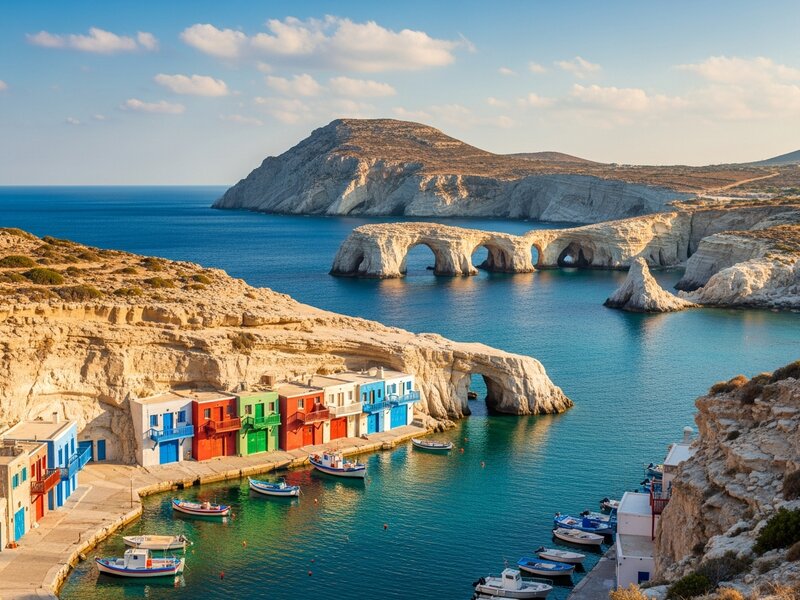
How to Get Around Milos by Bus (2026 Guide)
Milos is one of the most spectacular islands in the Cyclades — a volcanic landscape of white moonscape cliffs, multicoloured rock and more than 70 beaches. It's also bigger and more spread out than many visitors expect, so knowing how the bus works makes a real difference. This guide covers the island's bus network: the hub in Adamas, the main routes and stops, fares, summer and winter timetables, and the spots you'll still need a boat or car to reach.
Does Milos have a public bus?
Yes. Milos has a local bus network that links the port town of Adamas with the capital, Plaka, the second town of Pollonia, and several of the island's best-known beaches and villages. It's the cheapest way to get around, and for travellers based in Adamas, Plaka or Pollonia who want to see the headline sights, it's perfectly usable. The service is run by the island's local bus company, MilosBuses (you may also see it referred to as KTEL Milos).
The Milos bus network at a glance
Almost everything runs through Adamas (Adamantas), the harbour town where the ferries dock. The main bus terminal sits in the centre of Adamas, roughly 100 metres east of the ferry quay, and it's the hub for every route on the island. Buses fan out from here and return to it, so most journeys — even between two outlying points — pass back through Adamas.
Because it's a hub-and-spoke system, the bus is at its best when you're staying in or near Adamas and visiting the most popular destinations. Journeys between the main points are short, usually around 15–20 minutes.
Main Milos bus routes and stops
Routes and frequencies are set seasonally, but the core lines from Adamas are consistent year to year:
Adamas → Plaka → Trypiti (the capital line): Adamas – Triovasalos – Plaka – Catacombs (Katakombes) – Trypiti. This is the most frequent route. Plaka is the hilltop capital, home to the Venetian Kastro and the island's famous sunset; Trypiti has the early-Christian Catacombs and the ancient theatre, and is the walking gateway down to the postcard fishing village of Klima.
Adamas → Pollonia (the northeast line): Adamas – Parasporos – Mytakas – Pachaina – Papafragas – Fylakopi – Pollonia. Pollonia is the relaxed second town and the departure point for the ferry to neighbouring Kimolos. The route passes the Papafragas sea inlet and the Bronze Age site of Fylakopi.
Adamas → Provatas (the south line, and the longest): Adamas – Airport – Achivadolimni (Camping) – Provatas. This line connects the airport and the long sandy beach and campsite at Achivadolimni with Provatas beach in the south.
Adamas → Sarakiniko: the short hop to Milos's most iconic sight, the lunar-white volcanic rock formations. One of the busiest summer runs.
Adamas → Paliochori (Paleochori): a popular south-coast beach known for its warm geothermal sand and seaside tavernas.
Other stops and seasonal extensions (for example to Firiplaka in the south) appear on the summer timetable. The main terminals beyond Adamas are at Triovasalos, Plaka, Trypiti, Pollonia, Paliochori, Achivadolimni, Sarakiniko and Provatas, with request stops in between.
Tickets and fares
Price: most single rides cost around €1.80–€2.00.
How to pay: in cash, either from the driver on board or at the kiosk at the Adamas terminal. Carry small change.
Transfers: changing from one connecting line to another is generally free (a few special routes excepted).
Digital tickets: you can also buy a digital ticket through Greek Island Buses and board by showing the QR code on your phone — the same price as the kiosk, with no booking fee.
Summer vs winter timetables
The service runs on two seasonal schedules:
Summer (roughly late April to late October): the busy lines — Adamas–Plaka–Trypiti and Adamas–Pollonia — run several times a day, from early morning until late at night. Beach routes such as Sarakiniko, Paliochori and Provatas run less often (sometimes only a few times a day), so they need a little planning.
Winter: service is greatly reduced. The Plaka–Trypiti line keeps a handful of weekday departures and Pollonia a couple, while most beach routes don't run at all. Expect little or no service on Saturdays, Sundays and public holidays.
Timetables change with the season and occasionally at short notice, so always confirm current times when you arrive — they're posted at the Adamas terminal.
How to read the Milos timetable
There's one quirk worth knowing: posted departure times usually show when the bus leaves its first (originating) stop, not the time it reaches each stop along the way. If you're boarding at an intermediate stop, you'll need to estimate your time from the start point (a maps app helps) or ask at the terminal. Since most journeys are only 15–20 minutes, the estimate is rarely far off — but it's the single most common source of confusion for first-time visitors.
Beaches and sights you can reach by bus (and the ones you can't)
The bus is a great way to reach Sarakiniko, Paliochori, Provatas, Achivadolimni, the villages of Plaka, Trypiti and Pollonia, and the Catacombs. From Plaka and Trypiti you can also walk down to the fishing villages of Klima and Plathiena.
What the bus won't do is get you to the island's remote corners. The famous sea caves and cliffs at Kleftiko, plus beaches like Sykia, Gerakas and Tsigrado, are reached by boat tour (mostly from Adamas or Pollonia) or, in a few cases, a rough drive and scramble. For sunrise at Sarakiniko, hidden coves and the fishing hamlets, a car or ATV gives you the freedom the timetable can't.
Getting to Milos
Milos is reached by ferry from Piraeus (Athens), with crossings ranging from around 3 hours on a high-speed boat to 6–7 hours on a conventional ferry, plus connections to other Cyclades such as Sifnos, Serifos, Kimolos, Folegandros and Santorini. There are also short domestic flights from Athens to Milos airport. From the airport, the Adamas–Airport–Provatas bus line connects to Adamas, or you can take a taxi.
Bus vs car, ATV, taxi and boat
Bus: cheapest option; best if you're based in Adamas, Plaka or Pollonia and sticking to the main sights. Plan around the timetable.
Car or ATV: the most flexible choice for spread-out beaches, fishing villages and early starts. Book ahead in July–August.
Taxi: there are only a small number of taxis on the island, and they get hard to find at peak times — not a reliable plan A.
Boat tour: essential for Kleftiko and the southwest coast, which no road or bus reaches.
Plan your trip
Check the full Milos bus timetable and browse things to do on Milos to map your stops to the routes above. The bus covers the island's highlights affordably — just plan around the timetable and the last bus back.